
Antidepressants are the most common treatment for depression, and for many people they work well. But a large share of people don’t get full relief from their first medication — and in the landmark STAR*D study, the odds of remission dropped with each additional medication tried.
That’s where TMS comes in. Here’s how the two compare.
How they work
- Antidepressants change levels of brain chemicals like serotonin and norepinephrine. They travel through your whole body via the bloodstream.
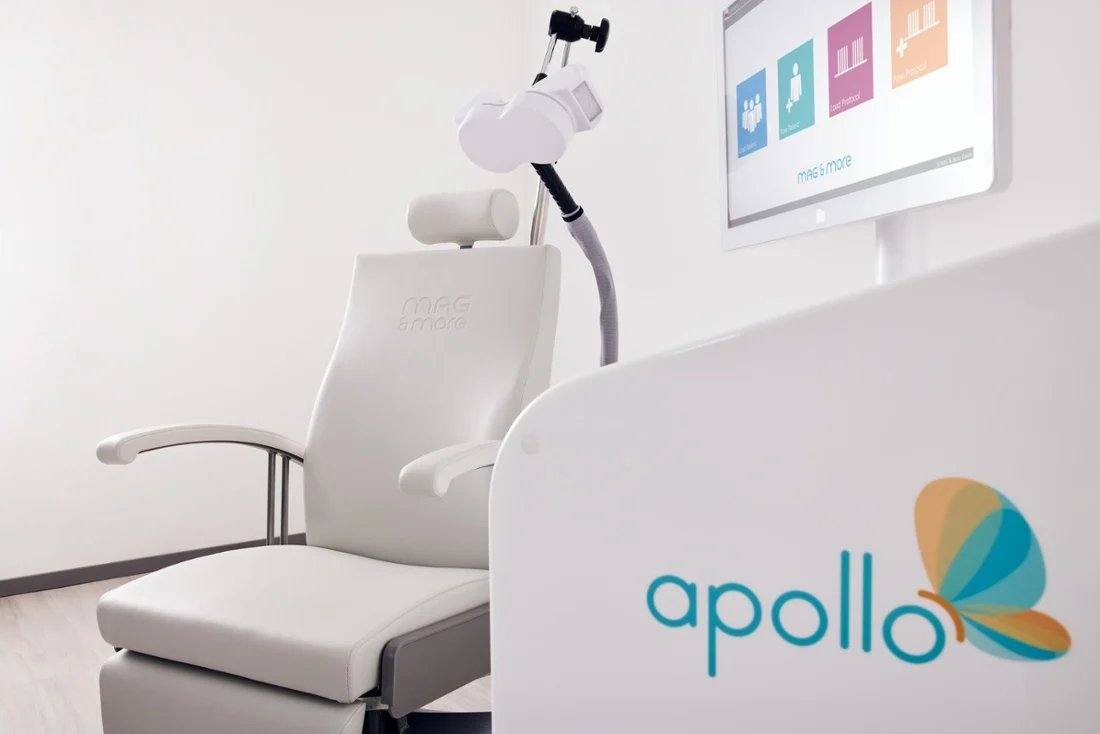
- TMS uses magnetic pulses to directly stimulate the specific brain region (usually the left prefrontal cortex) that’s underactive in depression. It stays local — nothing enters your bloodstream.
Side by side
| Antidepressants | TMS | |
|---|---|---|
| How it’s given | Daily pill | ~5 short office sessions/week for 6–9 weeks |
| Time to judge if it works | 4–8 weeks per medication | Often 2–4 weeks for early signs |
| Common side effects | Weight gain, sexual side effects, fatigue, nausea, emotional blunting | Mild headache, scalp discomfort |
| Drowsiness / impairment | Possible | None — you can drive after |
| Withdrawal when stopping | Possible | None |
| How long benefits last | While you take it | Often a year or more after treatment |
| Insurance | Covered | Usually covered after medication trials |
When antidepressants make sense
- First-line treatment for many people with depression
- You’re responding well with tolerable side effects
- Daily sessions aren’t practical for you
When TMS makes sense
- You’ve tried one or more antidepressants without enough relief
- Side effects made medication hard to stay on
- You want to avoid adding another medication
- You have medical conditions or other medications that make drug interactions a concern
- Pregnancy or breastfeeding considerations (discuss with your doctors)
You don’t have to choose
Most TMS patients stay on their current medications during treatment. TMS and antidepressants can work together. After a successful TMS course, some patients work with their prescriber to reduce or stop medication; others stay on it. Never stop a medication without medical guidance.
Frequently asked questions
Is TMS more effective than antidepressants?
They’re used in different situations, so direct comparisons are tricky. TMS has strong evidence in people who haven’t responded to medication — the group where another medication trial is least likely to help.
Can I start TMS instead of trying a medication?
Possibly, but insurance usually requires medication trials first. Self-pay is an option. We’ll talk through it.
Will TMS interact with my medications?
TMS doesn’t have drug interactions in the usual sense, but some medications affect seizure threshold. We review your full medication list.
Find out if TMS fits you
Call (951) 625-3733 or book a free consultation and EEG brain scan. Is TMS right for you?


