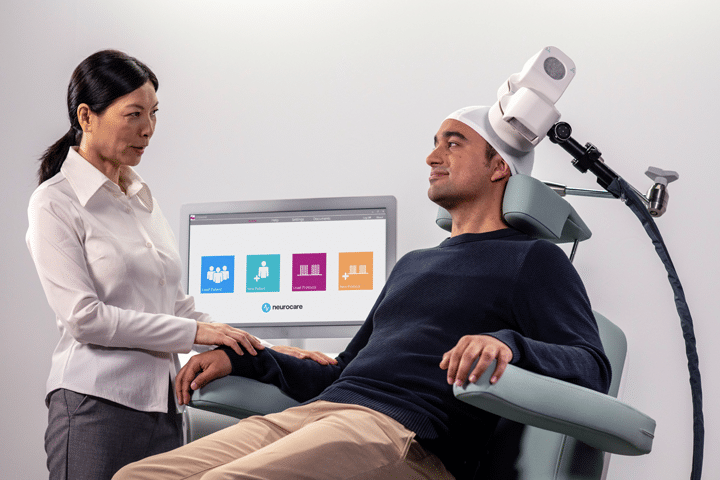
TMS is a non-invasive treatment that uses magnetic fields to stimulate nerve cells in the brain.
It’s an option for treating Obsessive-Compulsive Disorder (OCD), especially when other treatments haven’t worked.
Why TMS is a good treatment option for OCD
TMS is non-pharmaceutical TMS directly stimulates the brain to achieve healing; it does not use medications (such as antidepressants) to achieve relief.
TMS is effective TMS boasts high response and remission rates, even for patients with severe depression or diagnosed with treatment-resistant depression
TMS is covered by insurance TMS is covered by most medical insurance as a covered benefit. Inland Empire TMS accepts most major commercial plans, TRICARE, and TriWest (Veteran’s) insurance plans.
TMS is long-lasting TMS patients continue to maintain a beneficial response long after TMS therapy has finished. Patients do not have to remember to take daily medication
TMS has no systemic side effects TMS is extremely well-tolerated. It is non-invasive, requires no anesthesia or numbing, and has no systemic side effects.
What are the symptoms of OCD?
OBSESSIONS unwanted and distressing thoughts or urges that persistently occur in a person’s mind. Obsessions common to OCD include fear of germs and contamination, a need for symmetry and order, disturbing thoughts, or fear of harm or danger to oneself or to loved ones.
COMPULSIONS repetitive behaviors that individuals with OCD feel compelled to perform. Failure to perform the behavior often induces high levels of anxiety, to the point of needing to go back and execute the routine properly. Compulsions include excessive handwashing or housecleaning, repetitive checking behavior (such as repeatedly checking door locks or household appliances), counting, touching objects, or arranging objects in a particular manner.
services
Conditions We Treat
We use TMS to treat a range of mental health conditions — a safe, non-invasive therapy that targets the root causes in the brain, not just the symptoms.
TMS quiets the overactive brain loops that drive OCD.
ADHD
TMS stimulates underactive areas of the brain responsible for focus and impulse control.
Addiction
TMS targets the brain's reward and craving circuits, helping to reduce compulsive urges.
Start your journey
Schedule a
Free Consultation
At Empower TMS, we offer free EEG brain scans and mental health assessments for new patients—no strings attached. We believe in the power of seeing clear, visual results that validate how you’ve been feeling and may even uncover concerns you didn’t realize were there.
Take advantage of this opportunity to better understand your mental health and start your journey toward wellness.