
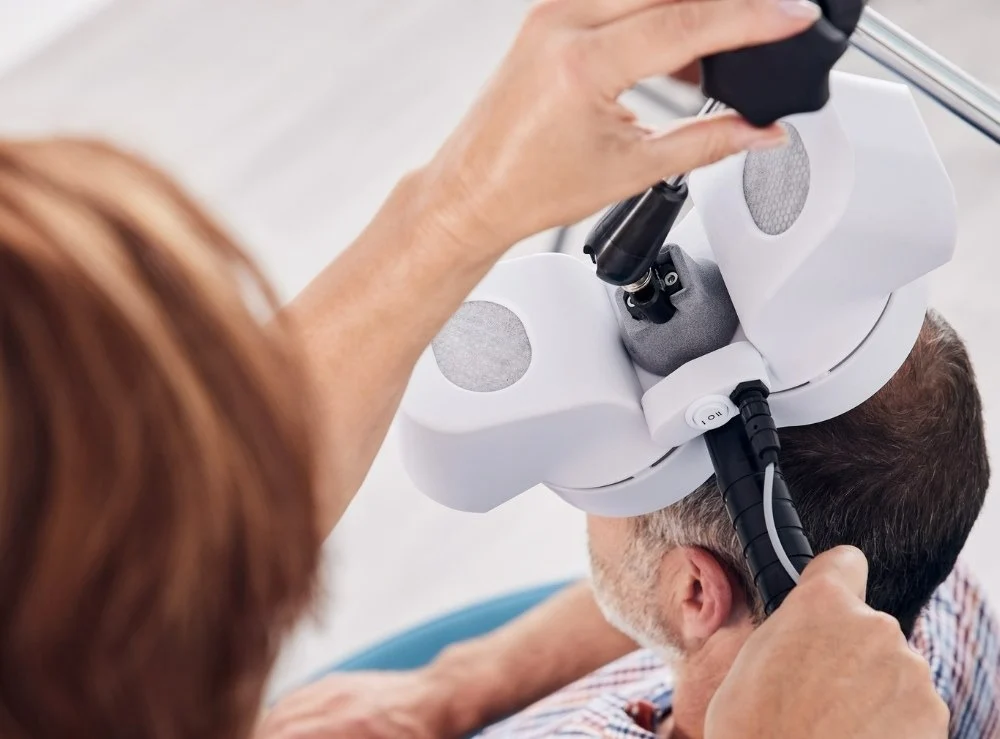
TMS isn’t instant — but it’s often faster than waiting through another round of medication trials. Most patients start to notice changes within 2–4 weeks, and the full benefit builds through the end of the treatment course.
Here’s a realistic timeline.
Why TMS takes time
TMS works by repeatedly stimulating underactive brain circuits involved in mood. Each session nudges those circuits toward healthier activity. Over weeks, the brain strengthens those connections — a process called neuroplasticity. Like physical therapy for the brain, the results come from repetition.
A week-by-week look
Week 1: Getting started
You’ll get used to the sensation and routine. Mild headaches or scalp discomfort are most common now. Don’t expect mood changes yet.
Weeks 2–3: Early signs
Many people first notice changes that aren’t mood:
- Sleeping better
- More energy in the morning
- Getting small tasks done
- Less irritability
- Thoughts feel a little less “heavy”
Family and friends often notice before you do.
Weeks 4–6: Building momentum
This is where many patients see clearer improvement in mood, motivation, and interest in things they used to enjoy. Your care team tracks progress with standard depression scales.
Weeks 6–9: Consolidating gains
The course wraps up, often with a taper of fewer sessions per week. Some people continue improving for a few weeks after treatment ends.
What if I don’t feel better by week 3?
Don’t panic. Some people are “late responders” who improve in the second half of treatment. Your clinician may adjust targeting or parameters. With PrTMS, we can compare follow-up EEG data to your original brain map and fine-tune your protocol. About PrTMS.
What about accelerated TMS?
Accelerated protocols deliver multiple sessions per day over a shorter period. One accelerated protocol (SAINT) is FDA-cleared for depression, but it isn’t widely available or covered by most insurance yet. Ask us whether an accelerated schedule makes sense for you.
How to get the most out of TMS
- Don’t skip sessions. Consistency matters more than anything.
- Keep up with therapy if you have a therapist. TMS can make therapy more productive.
- Move your body, even a short daily walk.
- Protect your sleep.
- Limit alcohol, which works against your mood and your brain’s recovery.
Frequently asked questions
How many sessions until I feel a difference?
Often around 10–20 sessions, though it varies.
Is TMS faster than antidepressants?
It can be, especially for people who’ve already cycled through several medications — each new drug trial can take 4–8 weeks to judge.
Do the effects wear off between sessions?
No. The benefit accumulates over the course of treatment.
Start your timeline
Call (951) 625-3733 or book a free consultation. See what to expect at EmpowerTMS.


