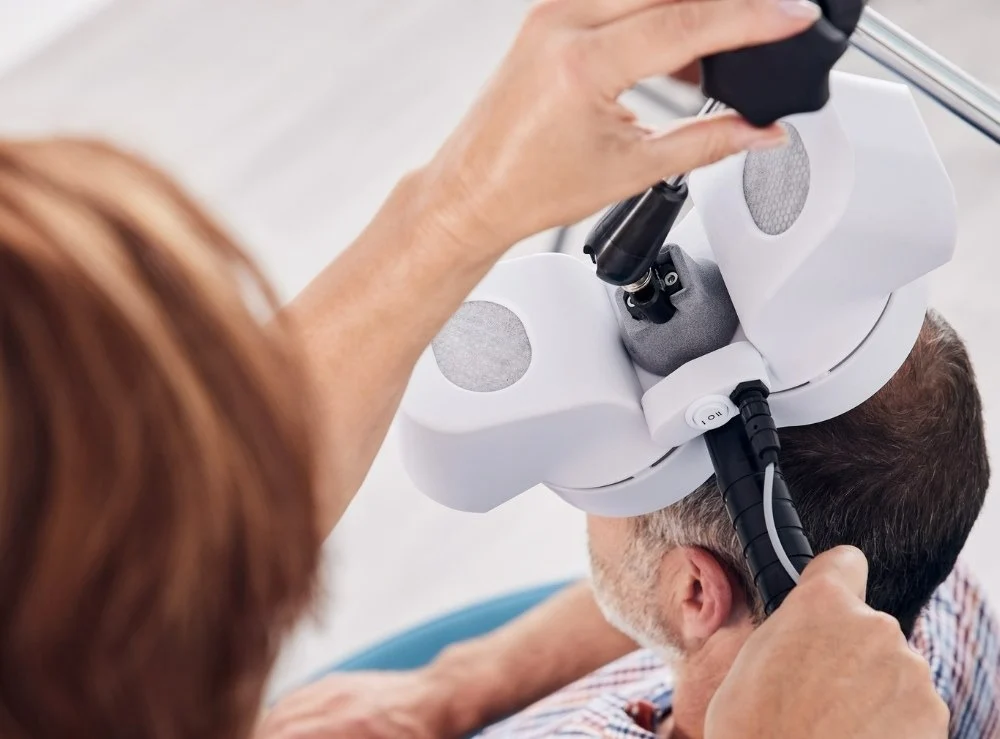
Yes. Medicare covers TMS therapy for major depressive disorder when certain medical criteria are met. That’s important news for older adults, because depression later in life is common, often under-treated, and antidepressants can be harder to tolerate with age.
Which part of Medicare covers TMS?
TMS is an outpatient procedure, so it falls under Medicare Part B. If you have a Medicare Advantage (Part C) plan, it must cover at least what Original Medicare covers, but it may have its own rules, networks, and prior authorization requirements.
Who qualifies?
Medicare covers TMS for depression, not other conditions. Requirements are set by regional Medicare contractors and can change, but they usually include:
- A diagnosis of major depressive disorder, typically severe
- Not enough relief from antidepressants, or inability to tolerate them
- An evaluation and order from a qualified physician, usually a psychiatrist
- A standardized depression rating score before and during treatment
- No contraindications, such as implanted metal near the head or a seizure risk that makes TMS unsafe
Medicare generally does not cover TMS for OCD, PTSD, anxiety, or other off-label uses.
How much will you pay?
Under Original Medicare, after you meet the annual Part B deductible, you typically pay 20% coinsurance of the Medicare-approved amount for each session. A Medigap (supplement) plan may pick up some or all of that 20%.
Medicare Advantage costs vary by plan — some charge a flat copay per session. Check your plan documents or let us verify for you.
How long does Medicare cover treatment?
Coverage typically includes a daily course of up to about six weeks, often followed by a short taper. If symptoms return after a successful course, retreatment may be considered under your plan’s rules.
Why TMS is a good fit for many older adults
- No drug interactions. Many seniors already take several medications. TMS doesn’t add to the pill burden.
- No sedation or anesthesia. Unlike ECT, there’s no need for general anesthesia, and no memory side effects.
- Minimal downtime. You can resume normal activities immediately.
- A family member can drive or wait in the lobby — but you can usually drive yourself.
What about Medi-Cal?
If you have both Medicare and Medi-Cal (“dual eligible”), Medicare usually pays first and Medi-Cal may help with your share. Medi-Cal-only coverage for TMS depends on your managed care plan.
Frequently asked questions
Is there an age limit for TMS?
No upper age limit. Your clinician will consider your overall health, medications, and any implanted devices.
Can I do TMS if I have a pacemaker?
Often yes, because pacemakers are in the chest, far from the treatment coil. Your clinician will review it. Metal implants in or near the head are a different story.
Does my Medicare Advantage plan need prior authorization?
Usually yes. Our team handles it for you.
Check your Medicare coverage
Call (951) 625-3733 or book a free consultation. Bring your Medicare card and a list of medications you’ve tried for depression.